The Case of Site Jab
In a recent court case, Site Jab, a popular online dating platform, found itself in a precarious situation. The company alleged that it had lost nearly $1 million in revenue due to the theft of its data.
The Insured claimed that the theft of client information constituted a direct physical loss of a building, and therefore, the loss should be covered under the Business Income provision.
The Policy’s Coverage Scope
The policy provided coverage for direct physical damage to or direct physical loss of a building caused by or resulting from any covered cause of loss during the policy period. This coverage scope was crucial in determining the Insured’s eligibility for compensation.
Key Points to Consider
The Insured’s Argument
The Insured argued that the theft of client information constituted a direct physical loss of a building. The Insured claimed that the theft of client information resulted in a loss of business income, which was a direct physical loss of a building.
Key Points to Consider
The Insured had not reported any damage to the property prior to the loss, and the Insured had not taken any steps to mitigate the loss. The court found that the Insured had not acted in good faith in reporting the loss, and therefore, the Insured was not entitled to recover damages.
The Case of the Unpersuasive Argument
The court’s decision in the case highlights the importance of providing evidence to support a claim. In this instance, the Insured failed to demonstrate that the damage to the property was a direct result of the covered event. The Insured’s lack of documentation and failure to report any damage prior to the loss made it difficult for the Insured to establish a clear causal link between the damage and the covered event.
The Role of Good Faith in Reporting a Loss
The court’s ruling also underscores the significance of good faith in reporting a loss. The Insured’s failure to report any damage prior to the loss and their lack of efforts to mitigate the loss raised concerns about their honesty and integrity.
The Insured appealed the decision, arguing that the loss was to money, albeit in a different form. The court of appeals upheld the lower court’s decision, stating that the Insured had not provided sufficient evidence to support their claim.
The Case of the Missing Data
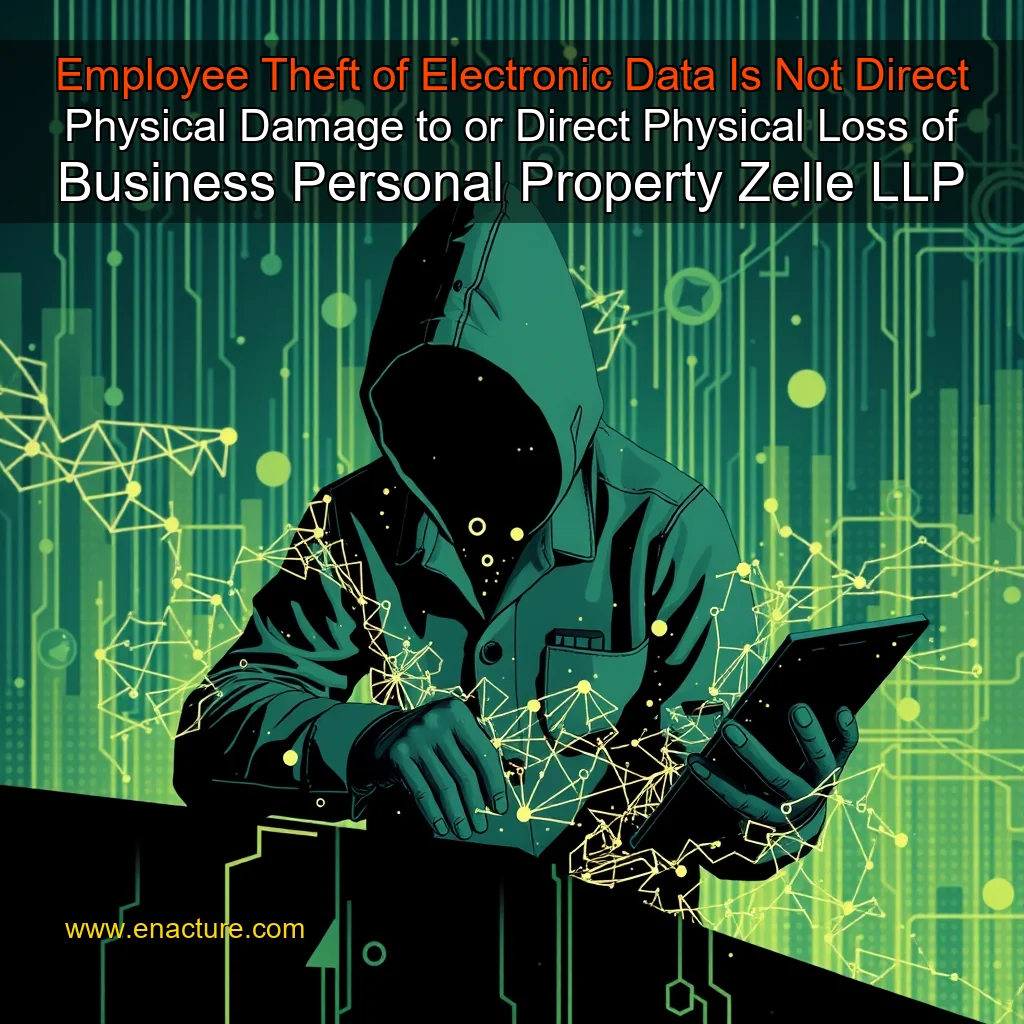
The Insured, a company that provided digital services, suffered a significant loss when their electronic data was stolen. The company had purchased a policy that included an Employee Dishonest Coverage extension, which would provide coverage for losses resulting from employee dishonesty. The Insured argued that the theft of their electronic data constituted a covered loss under the Policy.
## The Court’s Ruling
The court ultimately disagreed with the Insured’s argument, ruling that the Policy’s definition of business personal property excluded electronic data. The court also found that the Insured had failed to plead a loss to money or securities, which was a requirement for coverage under the Policy. Key points from the court’s ruling: + Business personal property, as defined by the Policy, excluded electronic data. + The Insured failed to plead a loss to money or securities. + The court’s decision was based on the Policy’s definition and the Insured’s failure to meet the requirements for coverage.
## The Appeal
The Insured appealed the decision, arguing that the loss was to money, albeit in a different form. The Insured claimed that the theft of their electronic data had resulted in a loss of revenue and business opportunities, which could be considered a loss to money or securities.
The court found that the windstorm caused a loss of the roof, but the damage was not sufficient to alter the property’s fundamental character. The court ruled that the windstorm did not cause a material alteration of the property, and therefore, Hiscox did not have a material breach of contract.
The Case of Hiscox v. Texas Farm Bureau Mutual Insurance Company
The case of Hiscox v.
The Precedent of Carrier Cases
The court’s ruling was influenced by a series of carrier cases that dealt with the issue of whether the virus caused physical damage to businesses. In these cases, courts generally ruled in favor of the carriers, finding that the virus did not cause sufficient physical damage to invoke coverage. Key takeaways from these cases include:
The Impact on Insurers
The court’s ruling has significant implications for insurers, particularly those who specialize in business interruption coverage. Insurers will need to carefully review their policies and adjust their underwriting practices to account for the changing landscape of business interruption claims.
[6] Id. at *3. [7] Id. [8] Id. (citing Fines v. State Farm Lloyds, 392 F.3d 802, 807 (5th. Cir. 2004)).