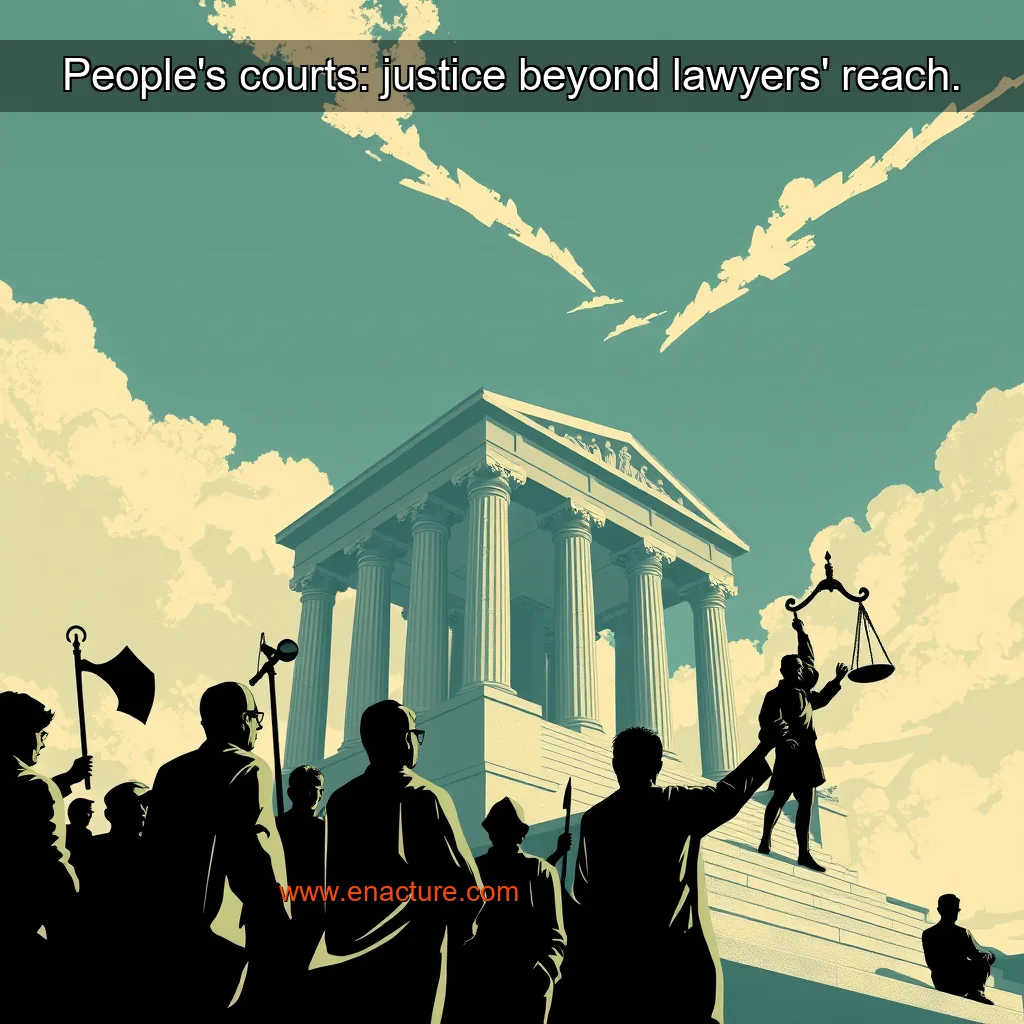
The judiciary’s growing power and influence pose significant challenges to the balance of power in the US government.
The Rise of the Judiciary as a Powerful Force
The judiciary has long been considered a pillar of democracy, providing a check on the other branches of government and ensuring that the rule of law is upheld. However, in recent years, the judiciary has begun to assert its power and influence in ways that are both fascinating and unsettling. The judiciary has become increasingly politicized, with judges and justices being appointed based on their ideological leanings rather than their qualifications or merit. The use of judicial review has become more widespread, allowing judges to strike down laws and regulations that they deem unconstitutional or unjust. The judiciary has also become more assertive in its role as a check on executive power, with judges challenging the authority of the president and other government officials.
The Impact of the Judiciary on Corporate Interests
The judiciary has a significant impact on corporate interests, and in recent years, this impact has become more pronounced. Here are some ways in which the judiciary has influenced corporate interests:
Evaluating Candidates for Judgeships
The commission’s evaluation process is rigorous and comprehensive.
The commission reviews the candidates’ backgrounds, experience, and qualifications. They also assess the candidates’ fit with the court’s culture and values.
The Judicial Selection Commission
The Judicial Selection Commission is a crucial component of the judicial selection process. This commission is responsible for reviewing and evaluating candidates for judgeships. The commission is composed of various stakeholders, including the governor, the chief justice, and other judicial officials.
This is a classic case of the “lawyers’ rule” – a phenomenon where the legal profession dominates the judiciary and the legal profession is the sole arbiter of the law.
The Judiciary Committee’s Decision
The Judiciary Committee is considering a proposal to remove non-lawyer seats on the Judicial Services Commission (JSC) and replace them with lawyer-only seats.
This phenomenon is known as the “corporate lawyer effect.”
The Corporate Lawyer Effect: A Study of Connecticut Judges
Background
The concept of the corporate lawyer effect has been extensively studied in the context of federal courts. However, a recent study focused on Connecticut’s judicial bench has shed new light on this phenomenon. The study, conducted by researchers at the University of Connecticut, analyzed the voting records of 100 judges who served on the state’s highest court between 1990 and 2015.
Methodology
The researchers employed a unique approach to identify the corporate lawyer effect in Connecticut. They categorized judges based on their pre-judicial experience, focusing on their work as corporate lawyers and prosecutors.
The Problem with Corporate Lawyers and Prosecutors on the Court
The lack of diversity on the state court bench is a pressing concern. The current composition of the court reflects a lack of representation from various backgrounds, including those who have made a career representing people. This is particularly concerning given the significant disadvantages that individuals may face when appearing before former corporate lawyers and prosecutors. For instance, they may be at a disadvantage when it comes to understanding the nuances of the law, as these individuals have spent their careers representing large corporations and government agencies. The lack of representation from diverse backgrounds can lead to a lack of understanding and empathy for the needs and concerns of the community. It can also result in decisions that are not in the best interest of the community, but rather in the best interest of the powerful and wealthy. Furthermore, the lack of representation can lead to a lack of trust in the court system, which can have far-reaching consequences for the community.
The Impact on the Community
The impact of having corporate lawyers and prosecutors on the court can be seen in various ways. For example:
In the state’s lower courts, the odds are even worse. In the lower courts, people have a win rate of 10%.
The Unfair Advantage of Corporate Influence
The North Carolina judicial system has been criticized for its perceived bias towards corporations and the state. This bias is evident in the court’s win rates, which show that individuals and small businesses have a significantly lower chance of winning their cases compared to corporations and the state.
We need to change the way we select judges.
The Importance of Diverse Judicial Selection
A Critical Examination of the Current System
The way we select judges in the United States is a topic of ongoing debate. While some argue that the current system is effective, others claim that it is biased and unfair. One of the primary concerns is that the current system favors those who have a strong network of connections and relationships within the legal community. This can lead to a lack of diversity on the bench, as those who are well-connected are more likely to be nominated and appointed. The American Bar Association (ABA) has identified several issues with the current system, including:
- Lack of diversity among nominees
- Overemphasis on experience and seniority
- Limited consideration of candidates with diverse backgrounds and perspectives
The Impact of Judicial Backgrounds on Rulings
A Study of Judicial Decision-Making
Research has shown that judges’ backgrounds can significantly impact their rulings. A study by the Brennan Center for Justice found that:
This study highlights the importance of considering a candidate’s background and experience when selecting judges.
The Importance of Representation in the Judiciary
The Connecticut General Assembly has a responsibility to ensure that the judiciary is representative of the people of Connecticut. This means that the courts should reflect the diversity of the state’s population, including its racial, ethnic, and socioeconomic backgrounds. A representative judiciary is essential for ensuring that the law is applied fairly and justly to all members of society.
The Problem of Underrepresentation
Join us in demanding a pro-people Connecticut Supreme Court.