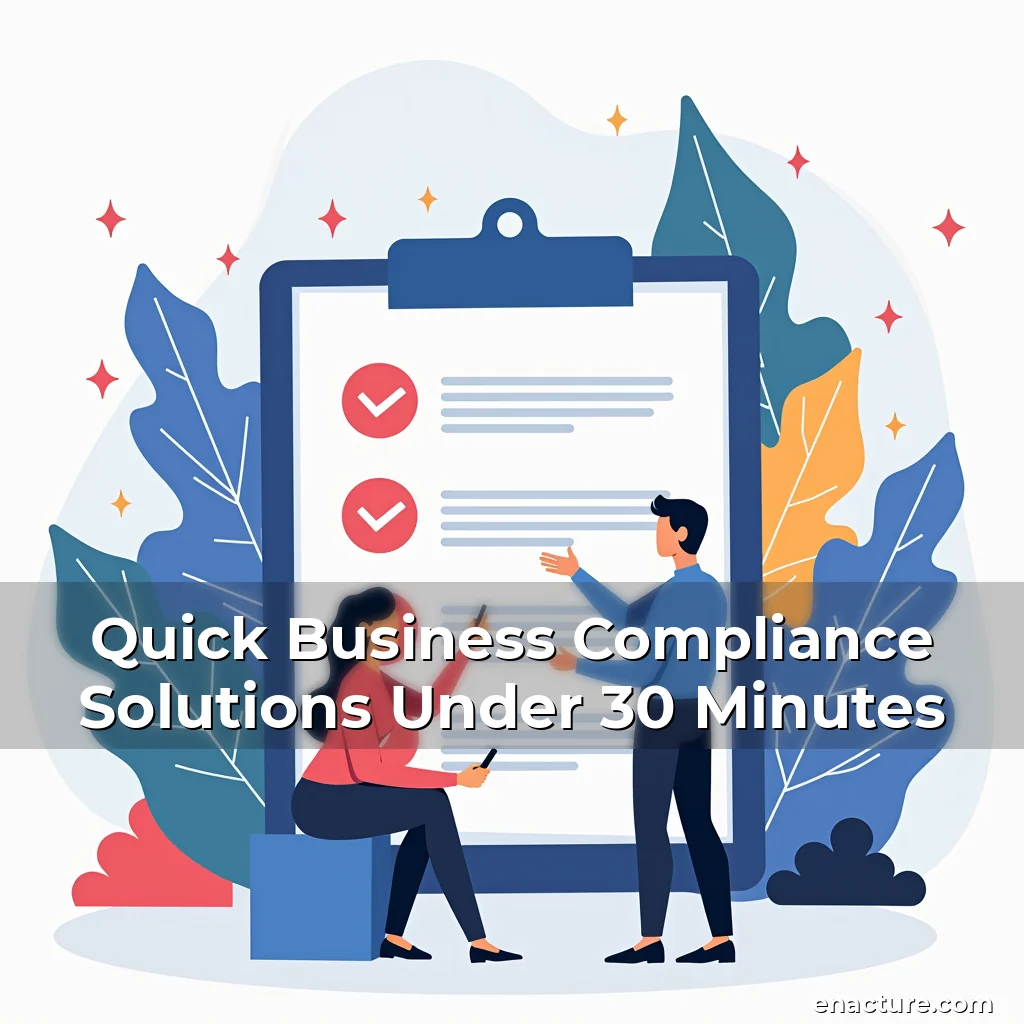
Quick Business Compliance Solutions Under 30 Minutes
In today’s fast-paced business environment, ensuring compliance is not just an obligation—it’s a strategic advantage that can protect your company from legal risks, financial penalties, and reputational damage. From data privacy regulations to industry-specific standards, businesses must navigate a complex web of rules without losing sight of their core objectives.
The challenge lies in efficiently managing these requirements while maintaining operational agility. This guide provides quick solutions tailored for time-constrained professionals who need practical strategies to stay compliant without sacrificing productivity.
Understanding the Foundations of Business Compliance
Business compliance refers to adhering to laws, regulations, guidelines, and ethical practices relevant to a particular industry or organization. It encompasses everything from labor laws and environmental protections to consumer rights and anti-corruption policies.
Maintaining compliance ensures that companies operate within legally defined boundaries, avoiding potential fines, lawsuits, or even criminal charges. More importantly, it builds trust among stakeholders by demonstrating accountability and responsibility.
- Labor Standards: Employers must follow minimum wage laws, overtime regulations, and workplace safety protocols as mandated by federal and state authorities.
- Data Protection: Organizations handling personal information are required to implement robust security measures under frameworks like GDPR or CCPA.
Failure to comply with any regulation can lead to severe consequences, including loss of licenses, forced business closures, or costly litigation. Therefore, establishing a strong foundation through awareness and education becomes essential for long-term success.
Common Legal Requirements Across Industries
Different industries face distinct regulatory challenges based on their operations, clientele, and geographical reach. For instance, healthcare providers must adhere strictly to HIPAA regulations regarding patient confidentiality, whereas financial institutions deal with stringent Know Your Customer (KYC) procedures.
Manufacturing firms often encounter environmental compliance issues related to emissions control, waste management, and hazardous material handling. Meanwhile, e-commerce platforms have responsibilities concerning digital marketing ethics, product liability claims, and international shipping protocols.
Healthcare Sector Specifics
HIPAA mandates that covered entities safeguard protected health information (PHI) against unauthorized access or disclosure. Non-compliance may result in substantial monetary penalties ranging from $100-$50,000 per violation depending on severity levels.
Beyond direct costs, non-adherence could also affect insurance rates, public perception, and overall operational continuity due to increased scrutiny from regulators or auditors during inspections.
Crafting Effective Internal Compliance Policies
An effective internal policy framework serves as both a roadmap for employees and documentation for audits. These policies should clearly outline expectations around acceptable behavior, reporting mechanisms for violations, disciplinary actions, and training requirements.
Policies need regular updates reflecting changes in legislation or organizational structure. Involving key departments such as HR, legal counsel, and senior leadership helps ensure alignment across all functions within the enterprise.
- Code of Conduct: Establishes behavioral norms aligned with corporate values while reinforcing ethical decision-making at every level.
- Whistleblower Protocols: Encourages open communication channels where concerns can be raised anonymously without fear of retaliation.
Regularly scheduled refreshers via workshops or online modules help maintain awareness levels among staff members regardless of tenure length or departmental affiliation.
Implementing Technology for Streamlined Compliance Management
Leveraging technology streamlines many aspects associated with tracking adherence to various regulations. Software solutions offer automated alerts when new legislations emerge affecting current workflows, reducing manual oversight efforts significantly.
Cloud-based systems enable real-time monitoring capabilities allowing teams across different locations to collaborate seamlessly on shared documents containing updated compliance checklists or audit trails.
- Compliance Management Systems (CMS): Centralize all documentation related to audits, certifications, permits, etc., making retrieval easier during investigations.
- Artificial Intelligence Tools: Help detect anomalies suggesting possible breaches through pattern recognition algorithms trained on historical datasets.
Investments made now toward technological integration yield dividends later by minimizing exposure risks linked to human error or outdated knowledge bases being relied upon solely for decision support.
Training Programs That Ensure Ongoing Education
Educating workforce continuously about evolving compliance landscapes prevents ignorance-driven infractions which might otherwise go unnoticed until they become problematic. Training sessions shouldn’t merely be informational but interactive experiences designed to reinforce learning outcomes effectively.
Customized programs catered specifically towards roles having higher risk profiles—such as finance officers dealing frequently with SEC filings—ensure targeted reinforcement rather than generalized instruction applicable universally yet less impactful individually.
- Role-Based Learning Modules: Tailor educational content according to individual job functions enhancing relevance and engagement factors substantially.
- Simulation Exercises: Enable participants practice responding appropriately simulated scenarios involving potential misconduct instances thereby improving preparedness rates considerably.
Ongoing assessment techniques including quizzes following each session gauge comprehension accurately helping identify gaps needing further attention promptly before becoming actual problems.
Conducting Regular Audits and Risk Assessments
Auditing processes regularly identifies areas requiring improvement proactively instead waiting until incidents occur prompting reactive responses potentially costing much more resources down-the-line. Internal audits complement external reviews conducted by independent third parties verifying objectivity.
Risk assessments systematically evaluate vulnerabilities present within existing structures identifying weak points susceptible exploitation thus enabling preemptive mitigation strategies implementation ahead schedule.
- Internal Audit Cycles: Scheduled examinations performed periodically by designated personnel familiarizing themselves thoroughly enough with operations to spot inconsistencies early on.
- Vendor Evaluation Processes: Scrutinize contractual agreements between organizations ensuring partners meet necessary standards preventing reputational harm stemming from affiliations with unscrupulous entities.
Documentation accompanying findings from these evaluations acts crucial evidence should disputes arise proving diligent maintenance efforts undertaken consistently over periods exceeding mere transactional interactions alone.
Building a Culture of Integrity Through Leadership Example
Leadership plays pivotal role shaping organizational culture particularly concerning attitudes towards integrity versus expedience. When executives demonstrate commitment publicly visible manner through speeches, written communications, or daily conduct choices communicated transparently then followers tend emulate similar behaviors naturally.
Cultivating environment valuing transparency encourages free flow ideas upwards promoting innovation simultaneously strengthening internal controls indirectly since people feel safe speaking up sooner rather than later when facing dilemmas threatening compliance status quo.
- Public Commitment Statements: Official declarations affirming dedication pursuing lawful means achieving goals serve reminder constant vigilance maintained throughout entire lifecycle operations.
- Recognition Programs: Reward individuals exhibiting exemplary conduct aligning closely preferred values reinforcing positive reinforcements consistently throughout year-round activities.
This approach fosters loyalty amongst team members realizing contributions valued highly contributing directly toward sustainable growth trajectories benefiting everyone involved including shareholders concerned primarily maximizing returns generated fairly ethically responsibly.
Conclusion
Staying compliant doesn’t mean slowing progress; rather it enables smarter decisions leading ultimately greater efficiencies realized through avoidance unnecessary disruptions caused noncompliant activities carried out unknowingly.
By implementing structured approaches combining clear policies supported modern tools alongside continuous education initiatives grounded solid cultural foundations built upon trustworthy relationships nurtured strategically planned investments yields lasting competitive advantages distinguishing successful enterprises apart others struggling simply survive amid increasingly demanding landscape.

news is a contributor at Enacture.com. We are committed to providing well-researched, accurate, and valuable content to our readers.