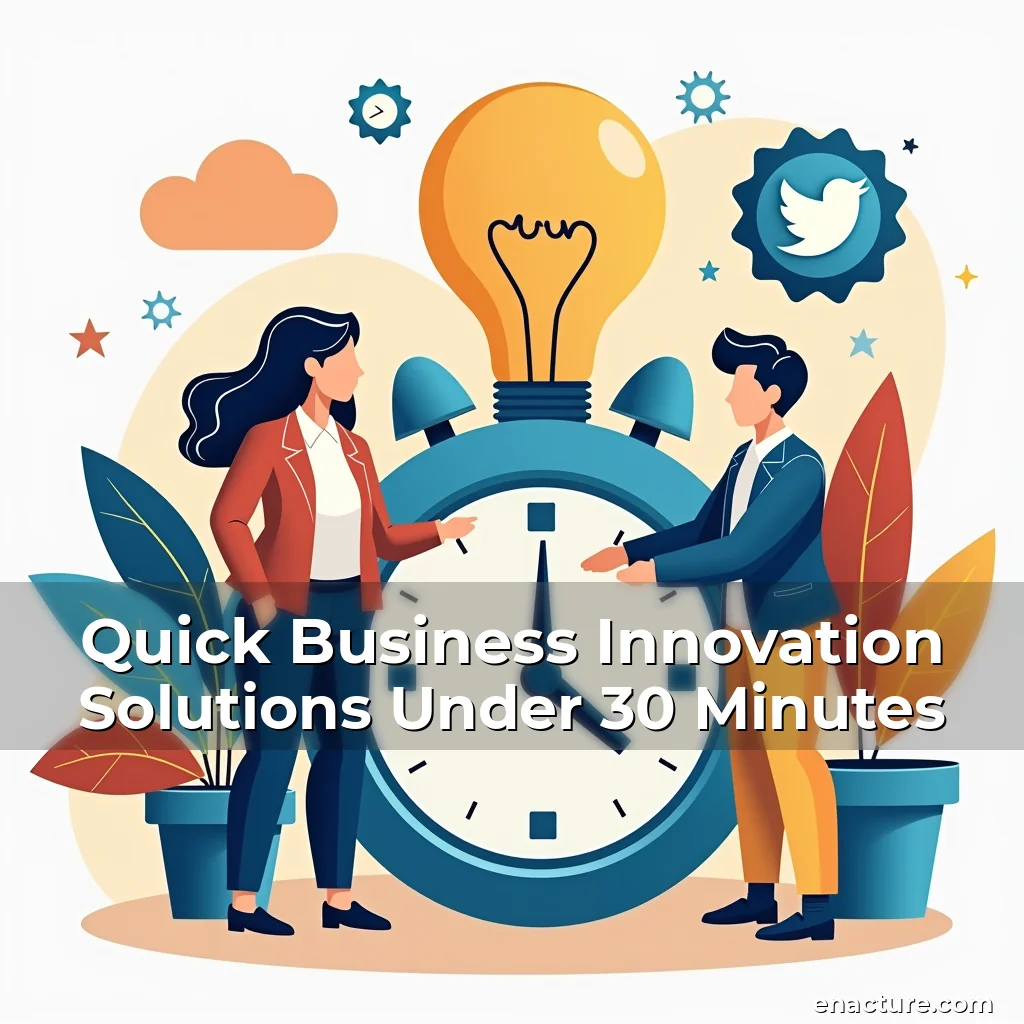
Quick Business Innovation Solutions Under 30 Minutes
In today’s fast-paced business environment, staying ahead requires rapid adaptation and creative problem-solving. Whether you’re an entrepreneur or part of an established enterprise, finding efficient ways to innovate is essential.
The key lies in leveraging time effectively while maintaining high-quality results. This guide offers practical strategies that can be implemented quickly without compromising value.
The Power of Rapid Prototyping
Rapid prototyping allows businesses to test ideas swiftly before full-scale implementation. It minimizes risk by identifying potential issues early in development cycles.
This approach fosters a culture where experimentation becomes second nature rather than something reserved only for R&D departments.
Example: A startup used rapid prototyping techniques to refine their product concept within two weeks instead of months. They gathered user feedback rapidly through iterative design changes.
By focusing on quick iterations over perfectionism at initial stages, companies save both time and resources while ensuring market relevance from day one.
- Speed:** Quick turnaround times enable faster decision-making processes across various organizational levels.
- Cost efficiency:** Reducing trial-and-error phases lowers overall project costs significantly.
- User-centric design:** Continuous interaction with target audiences leads to better alignment between products/services and consumer needs.
Leveraging Technology for Immediate Impact
Modern technologies provide tools that facilitate immediate innovation without requiring extensive training periods. Cloud computing platforms offer scalable solutions tailored specifically towards agile methodologies.
Artificial intelligence applications now support data analysis tasks previously considered too complex for non-experts. These advancements democratize access to powerful analytical capabilities.
For instance, small businesses utilize AI-powered chatbots not just as customer service representatives but also as marketing analytics engines capable of tracking engagement metrics in real-time.
Mobile-first approaches ensure these technological benefits are accessible even when working remotely—critical during global disruptions such as pandemics or economic downturns.
Considerations: While adopting new tech seems promising, it’s crucial to assess compatibility with existing systems and workforce readiness before making investments.
Fostering Internal Creativity Through Structured Sessions
Structured creativity sessions help tap into collective employee wisdom efficiently. Techniques like brainstorming marathons encourage diverse perspectives within limited timeframe constraints.
These activities promote cross-functional collaboration which often leads to breakthrough innovations otherwise missed by siloed teams.
Best practice tip: Limit each session duration to under three hours; longer meetings tend to decrease productivity due to fatigue factors.
Implementing regular ideation events ensures continuous flow of novel thoughts aligned strategically with company goals rather than random suggestions.
A study published in Harvard Business Review found organizations conducting weekly innovation workshops experienced a 38% increase in successful product launches compared to those who didn’t.
This statistic underscores how consistent effort combined with structured formats enhances chances of impactful outcomes.
Bridging Gaps With Customer-Centric Innovations
Customer-centric innovations prioritize solving actual problems faced daily by end-users. By deeply understanding pain points, businesses create offerings that resonate strongly with target markets.
Utilizing digital channels enables direct communication with customers regarding feature requests or usability concerns related to current services/products.
Case example: An e-commerce platform analyzed customer reviews extensively using NLP algorithms and identified common complaints about checkout process complexity.
They redesigned their interface based on this insight resulting in improved conversion rates along with higher satisfaction scores post-redesign.
Actionable steps include: Regularly reviewing social media comments, implementing survey tools, establishing dedicated feedback loops between clients and developers.
Building Strategic Partnerships for Accelerated Growth
Strategic partnerships accelerate growth trajectories by combining strengths of different entities operating within complementary domains.
Collaborative ventures allow sharing risks associated with launching new initiatives while accessing broader networks simultaneously.
Successful partnership indicators: Shared vision, clear roles & responsibilities defined upfront, mutual respect toward intellectual property rights.
Establishing joint ventures around emerging trends positions participating firms advantageously against competitors still figuring out optimal entry strategies themselves.
A notable case involved two competing software providers joining forces temporarily to develop integrated solutions benefiting both sets of users seamlessly.
This move not only expanded market reach exponentially but also created synergies leading toward long-term sustainable relationships beyond initial agreement terms.
Embracing Agile Methodologies For Faster Execution
Agile methodologies emphasize flexibility allowing adjustments mid-project lifecycle without derailing entire operations.
Unlike traditional waterfall models rigidly following sequential phases until completion, agile frameworks embrace change as natural progression element.
Core principles behind agility: Iterative development cycles, constant stakeholder involvement, prioritization based upon evolving requirements.
Adopting Scrum or Kanban boards helps visualize workflows clearly helping track progress objectively against set milestones regularly reviewed during standup meetings.
Organizations embracing agile reported up to 40% quicker delivery timelines according to PMI research findings released last year.
This shift supports responsiveness necessary amid volatile external conditions affecting supply chains or regulatory landscapes unexpectedly.
Measuring Success And Refining Strategies Continuously
Evaluating performance consistently provides insights required to tweak approaches dynamically improving effectiveness continuously.
KPIs such as Net Promoter Score (NPS), Customer Acquisition Cost (CAC), Lifetime Value (LTV) serve as benchmarks indicating health status periodically assessed alongside other relevant metrics.
Data-driven decisions:** Utilizing dashboards aggregating real-time analytics empowers leaders make informed choices promptly adjusting course whenever needed.
Prioritizing quality over quantity ensures refined strategies yield tangible returns aligning closely with strategic objectives outlined initially.
Tip: Set aside monthly review sessions focused exclusively on analyzing recent achievements versus expected targets setting realistic expectations moving forward.
Maintaining open lines of communication facilitates swift resolution of any discrepancies detected thereby minimizing negative impacts arising thereof.
Conclusion
Businesses aiming for sustained success must adopt innovative practices suitable for quick deployment yet robust enough delivering lasting value propositions.
Combining elements discussed—from leveraging technology wisely to fostering internal creativity—you empower your organization navigate uncertainties confidently achieving desired outcomes efficiently.

news is a contributor at Enacture.com. We are committed to providing well-researched, accurate, and valuable content to our readers.